📓 Chapter 5: The UK Government, the Law and Your Role
5.6.4 Everyday needs
3 paragraphs · 25 questions
When you move to the UK, there are several practical things you need to know. You should register with a local GP (doctor) for healthcare. If you need emergency medical help, call 999 or go to the nearest Accident and Emergency (A&E) department. For non-emergency medical advice, you can call NHS 111. You should also register your children at a local school — education is compulsory for children aged 5 to 18.
Key Facts
- Register with GP for healthcare
- Emergency: call 999 or go to A&E; non-emergency: NHS 111
- Education compulsory ages 5-18; register children at school
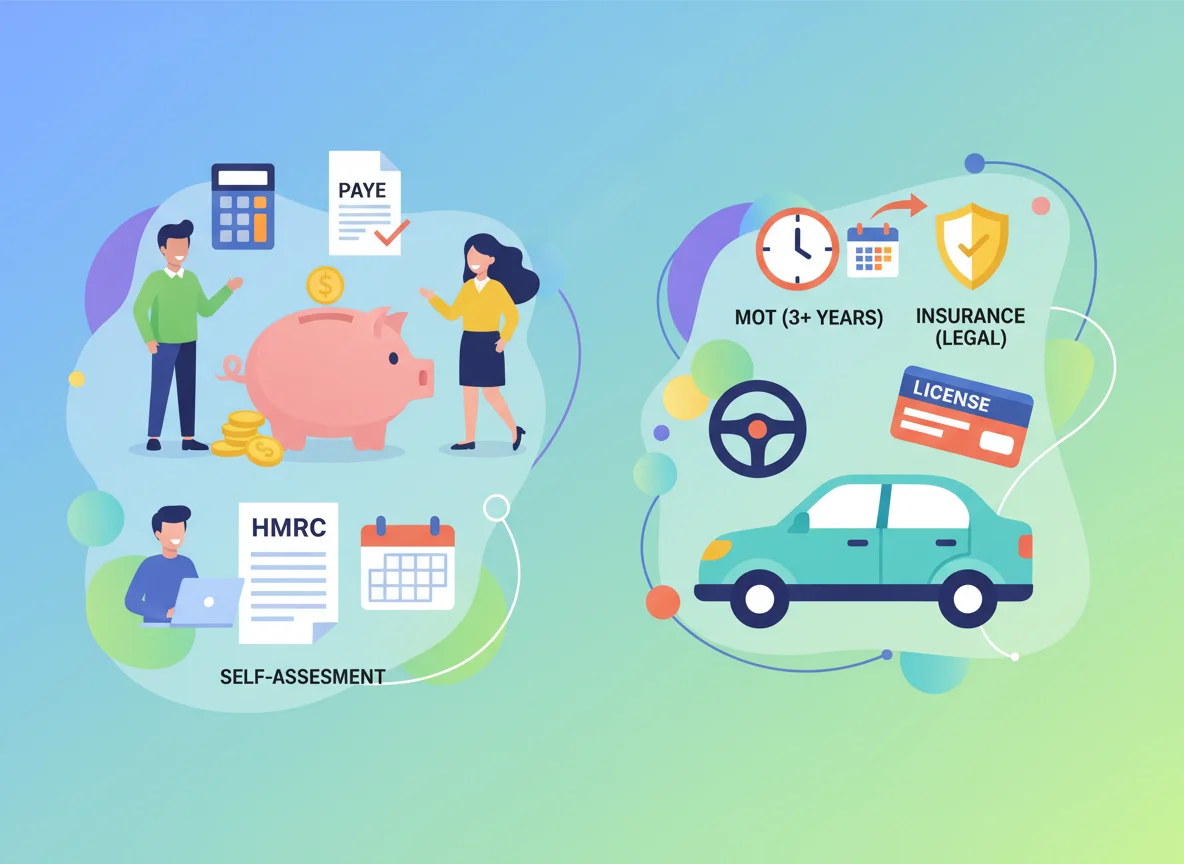
You need to pay taxes if you earn money in the UK. Most employees pay income tax and National Insurance through the PAYE (Pay As You Earn) system. Self-employed people must register with HMRC and complete a self-assessment tax return. You should also get insurance for your home and car (car insurance is a legal requirement). If you drive, you must have a valid driving licence, MOT certificate (for cars over 3 years old), and car insurance.
Key Facts
- Pay income tax and National Insurance via PAYE
- Self-employed: register with HMRC, self-assessment
- Car: need licence, MOT (over 3 years), insurance (legal requirement)
To open a bank account, you will usually need proof of identity and proof of address. Utility bills, council tax bills, or a letter from your employer can serve as proof of address. You should also learn about consumer rights — if you buy faulty goods, you have the right to a refund, repair, or replacement under the Consumer Rights Act 2015.
Key Facts
- Bank account: need proof of identity and address
- Proof of address: utility bills, council tax, employer letter
- Consumer Rights Act 2015 — right to refund, repair, replacement for faulty goods
Advertisement