📕 Chapter 3: A Long and Illustrious History
3.4.6 The slave trade and its abolition
2 paragraphs · 4 questions
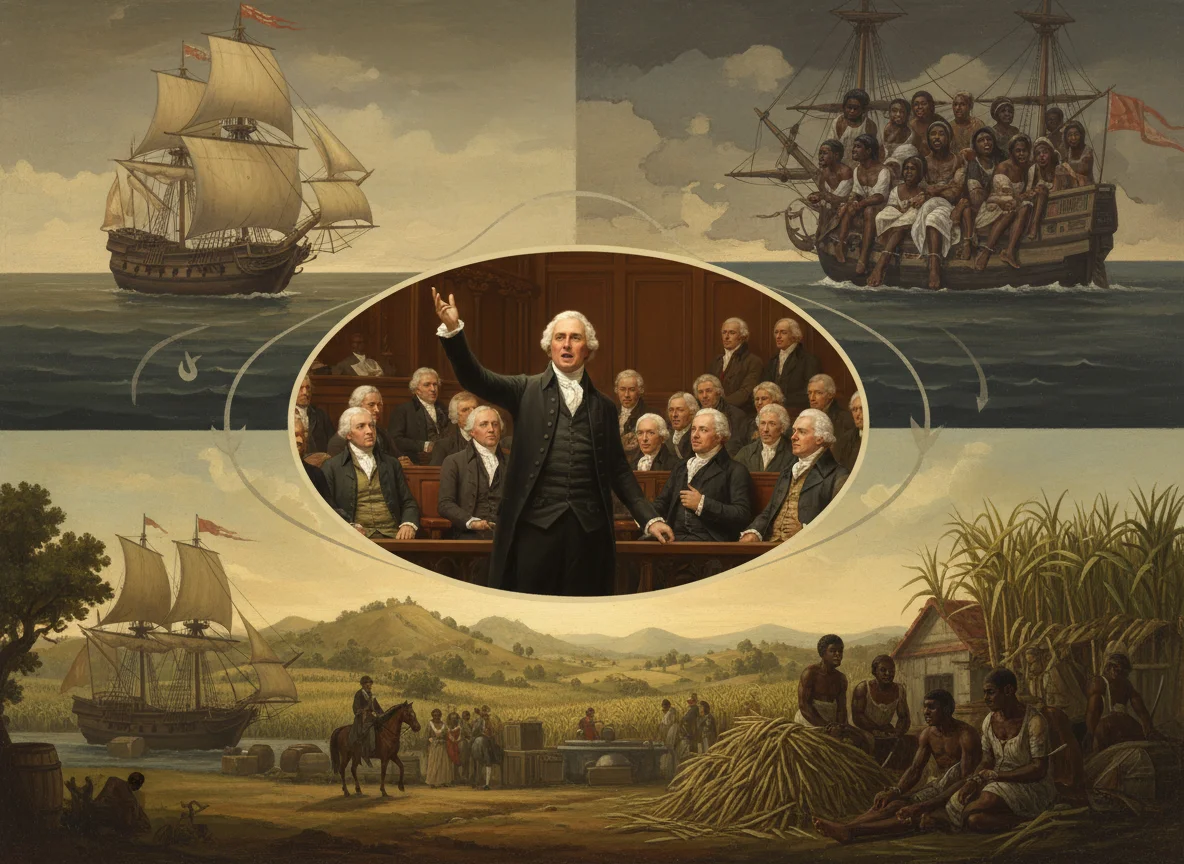
From the 17th century, British traders played a major role in the transatlantic slave trade. Ships carried goods from Britain to Africa, where they were exchanged for enslaved people. The enslaved people were transported in terrible conditions across the Atlantic to the Caribbean and Americas (the 'Middle Passage'), where they were sold to work on plantations.
Key Facts
- Britain played major role in transatlantic slave trade
- Triangular trade: goods to Africa, slaves to Americas, products to Britain
- Middle Passage — terrible conditions crossing the Atlantic
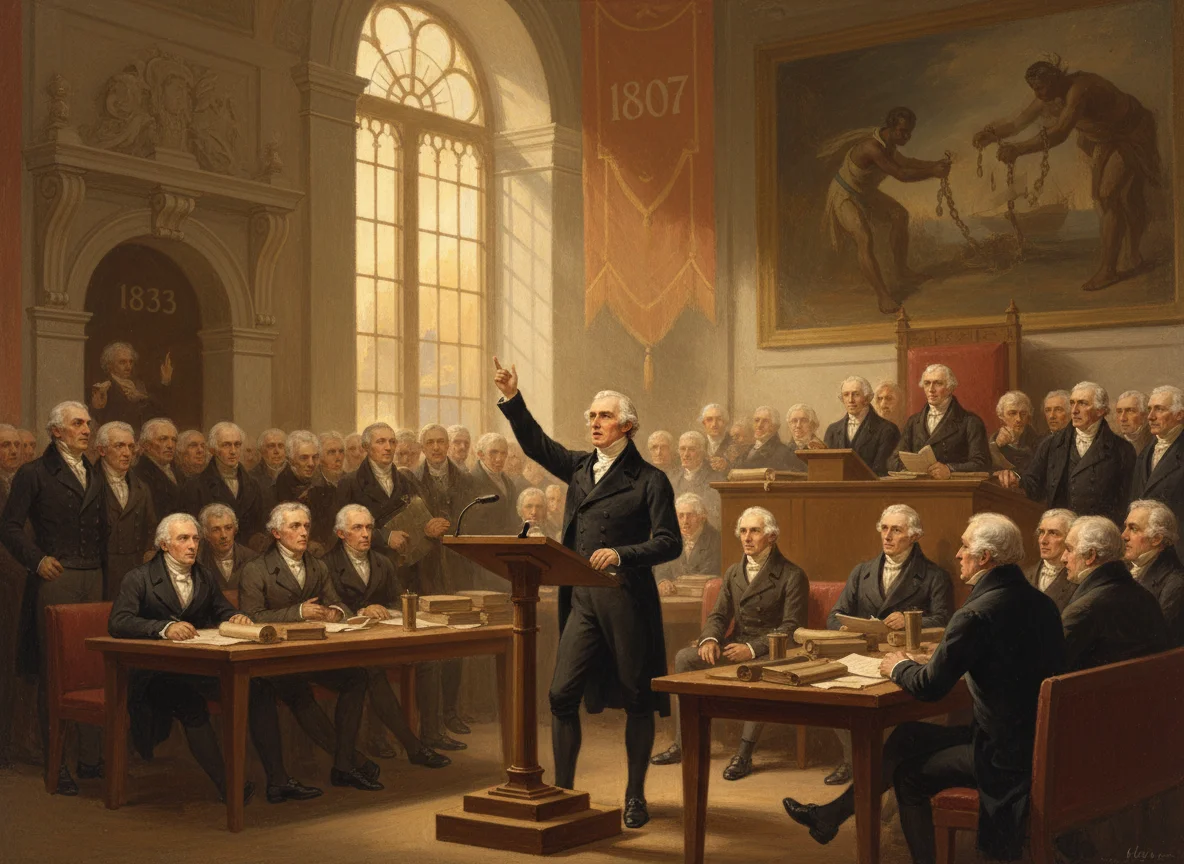
In the late 18th century, a campaign to abolish the slave trade grew in Britain. William Wilberforce, an MP, led the campaign in Parliament. Quakers and other religious groups also played an important role. The slave trade was abolished in 1807, and slavery itself was abolished throughout the British Empire in 1833. Wilberforce died just three days after hearing that the abolition of slavery would become law.
Key Facts
- William Wilberforce led abolition campaign in Parliament
- Slave trade abolished 1807
- Slavery abolished throughout British Empire 1833
Advertisement