📕 Chapter 3: A Long and Illustrious History
3.2.3 The development of Parliament
2 paragraphs · 5 questions
During the Middle Ages, the English Parliament gradually developed. In 1264, Simon de Montfort called the first Parliament that included ordinary people (not just nobles and bishops). This is sometimes called the first 'representative' Parliament. By the end of the 13th century, Parliament had become an established institution with two chambers.
Key Facts
- Simon de Montfort called first representative Parliament in 1264
- Included ordinary people, not just nobles
- Parliament became established with two chambers by end of 13th century
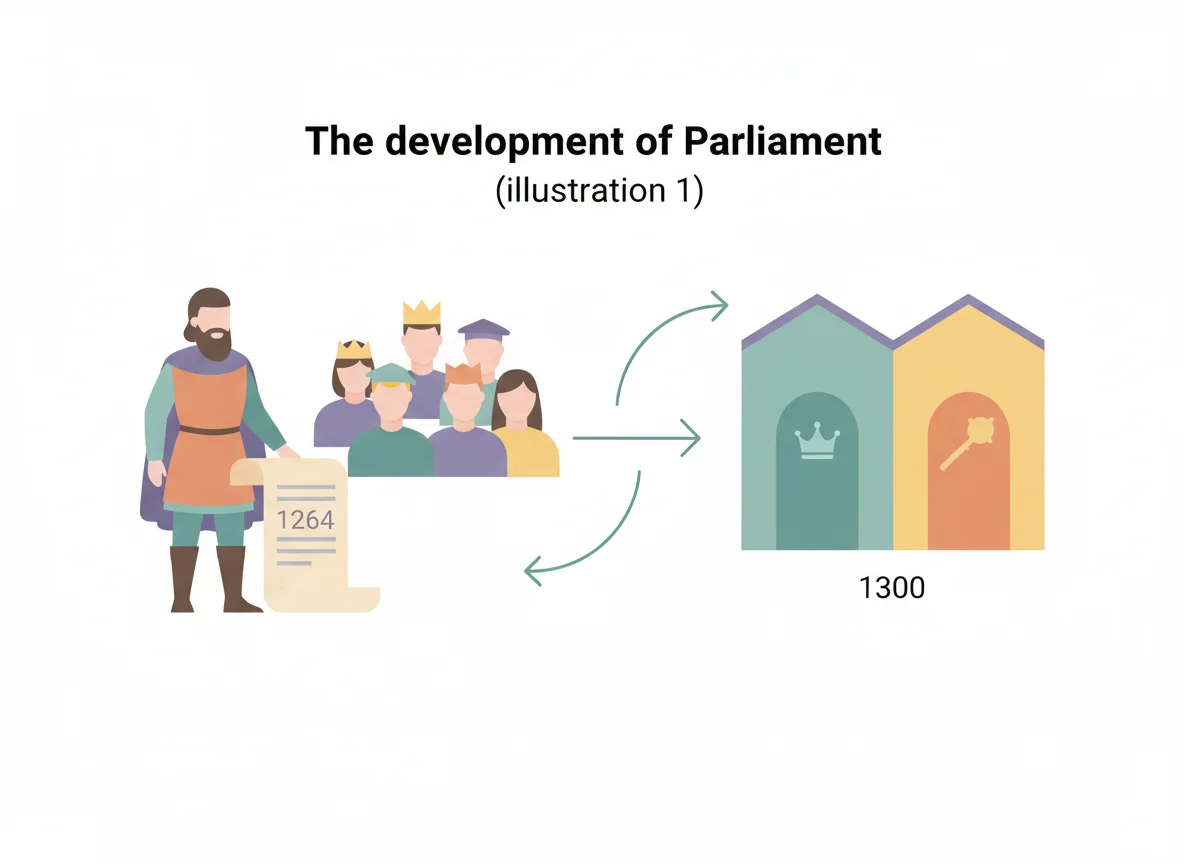
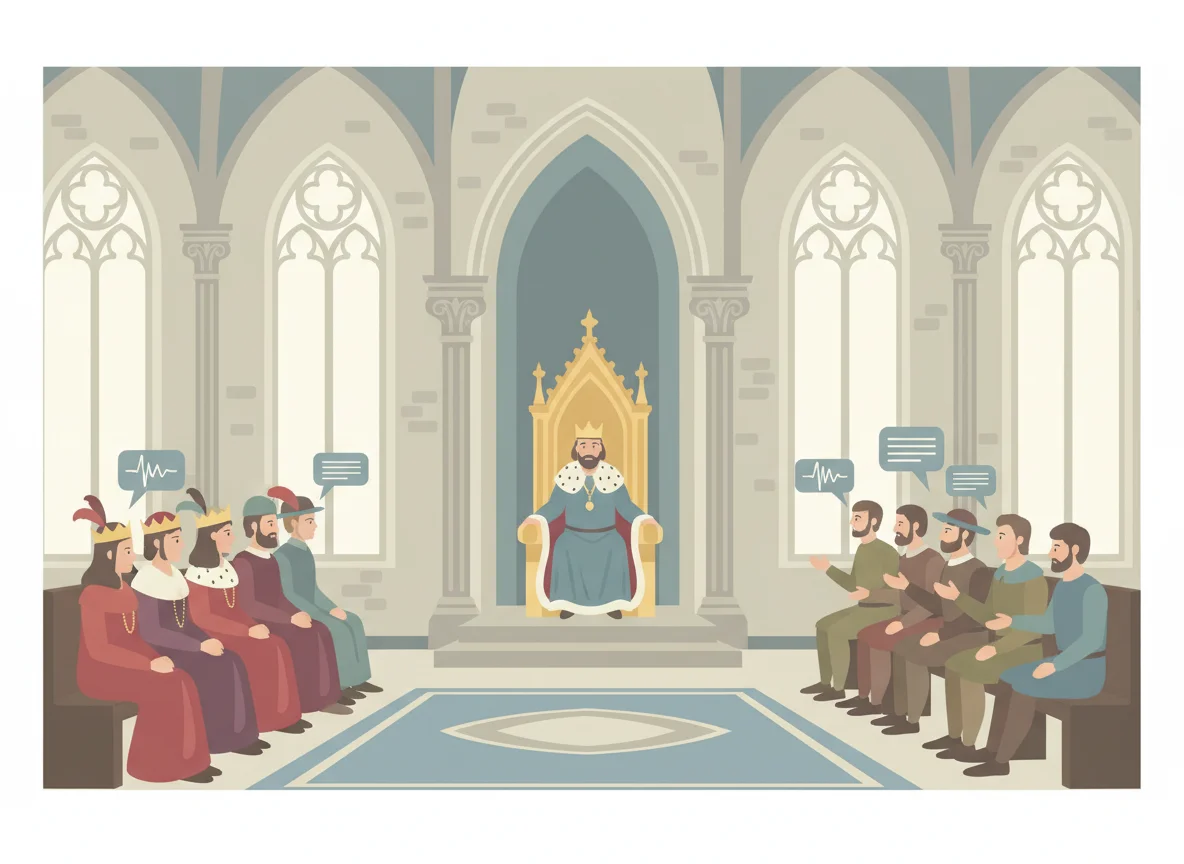
Parliament developed into two Houses: the House of Lords (for nobles and bishops) and the House of Commons (for knights and wealthy townspeople). The king needed Parliament's approval to raise taxes. Over time, Parliament gained more power and became an essential part of governing England. This was the beginning of the parliamentary system that exists today.
Key Facts
- House of Lords for nobles; House of Commons for commoners
- King needed Parliament's approval for taxes
- Beginning of the modern parliamentary system
Advertisement