📕 Chapter 3: A Long and Illustrious History
3.2.1 The feudal system and the Domesday Book
2 paragraphs · 5 questions
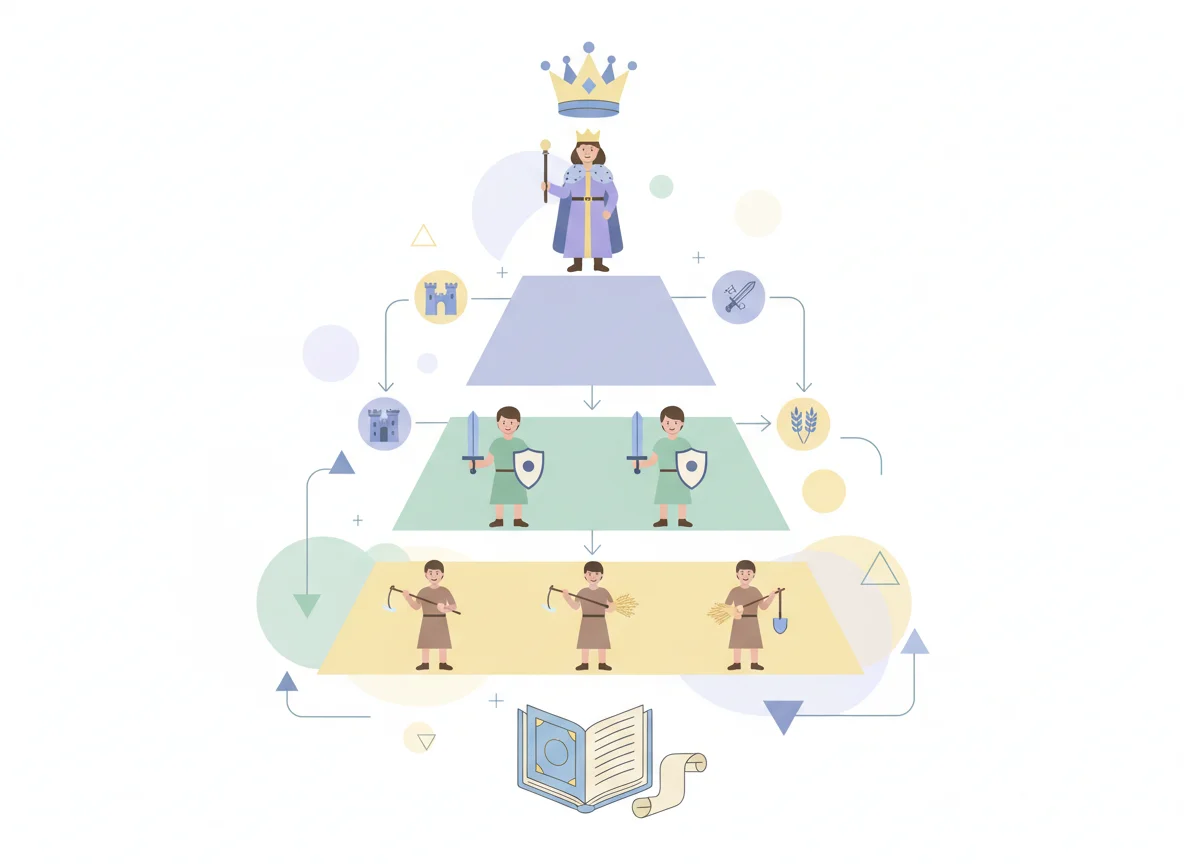
Under the feudal system introduced by the Normans, the king owned all the land. He gave large estates to his most important followers (barons and lords) in return for their loyalty and military service. These lords then divided their land among knights, who in turn allowed peasants (serfs) to farm small plots in exchange for labour and a share of their crops.
Key Facts
- King owned all land under feudal system
- Land given to barons/lords for loyalty and military service
- Peasants (serfs) farmed land in exchange for labour
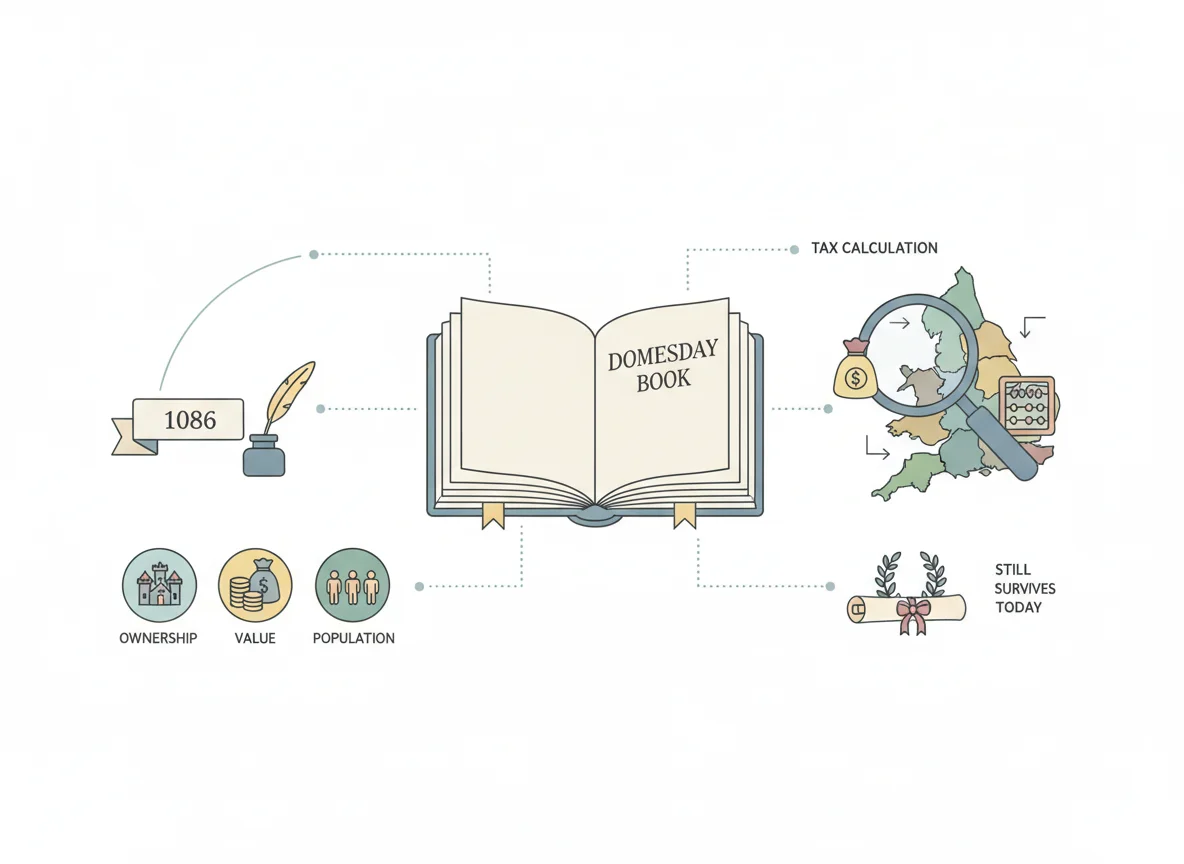
The Domesday Book, completed in 1086, was a great survey ordered by William the Conqueror. It recorded details of every town, village, and farm in England — who owned the land, how much it was worth, and how many people and animals lived there. It was used to calculate taxes. The Domesday Book is one of the most important historical documents in England and still survives today.
Key Facts
- Domesday Book completed in 1086
- Recorded ownership, value, population of every settlement
- Used to calculate taxes; still survives today
Advertisement